1. A major, K. 322 - 3:24
2. A major, K. 323 - 2:12
3. D minor, K. 89b - 1:15
4. D minor, K. 9 - 3:50
5. E major, K. 215 - 7:05
6. E major, K. 380 - 4:14
7. G major, K. 259 - 3:00
8. G major, K. 260 - 4:29
9. E minor, K. 263 - 3:10
10. B minor, K. 87 - 6:37
11. A major, K. 208 - 3:40
12. G minor, K. 88d - 1:27
13. G minor Fugue, K. 30 - 5:27
14. G major, K. 391 - 1:32
15. D minor, K. 1 - 3:26
16. G minor, K. 426 - 3:35
17. C minor, K. 158 - 5:07
18. C major, K. 159 - 2:30
19. G major, K. 470 - 4:27
20. B-flat major, K. 472 - 5:13
Description
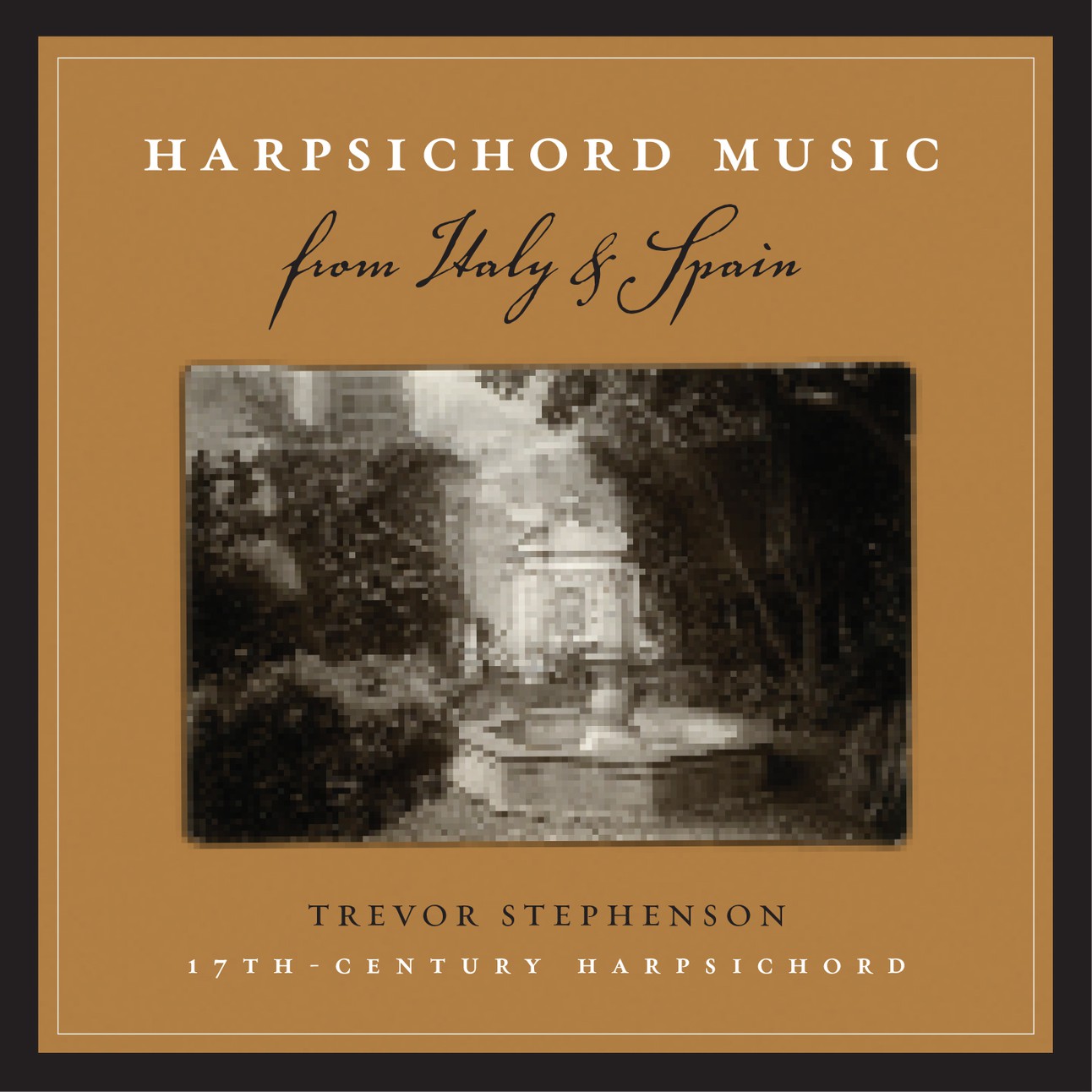
The Italian-style harpsichord heard in this recording is modeled on a circa 1600 instrument that was already vintage in 1685 when Domenico Scarlatti was born. Yet, since fledgling musicians typically imprint on – and cultivate throughout their career – aspects of sound and style that they inherited and were exposed to early on, there is value for us in hearing what an older harpsichord might have sounded like under a young Scarlatti’s hands when he was first working out his musical ideas.
Early 17th-century Italian harpsichord design put a premium on clarity and immediacy of pitch instead of upon power and sustain, as would become the norm later in the 18th century. On these early instruments, individual tones spoke quickly and dropped away quickly, creating an intriguing sonic chiaroscuro or sense of light and shadow. Because the sound was so tidy, notes were relatively easy to organize through articulation into distinct groupings, which facilitated the intricate rhetorical gestures of the Baroque. The early harpsichord also displayed within its gamut (five octaves on this instrument, GG-g”) distinct timbral registers, corresponding approximately to types of human singing voices: bass, baritone, tenor, alto, and soprano. It was the interactions of these voices, bouncing about among ten very busy fingers in Scarlatti’s music, that provided sparkle, zest, and a sense of energetic dialogue.
The early harpsichord’s facility in rendering character also helped it bring out another key element of Scarlatti’s style strong emotional contrast occurring over time, from phrase to phrase. Scarlatti seemed to enjoy juxtaposing effusive with reclusive materials as it were, bright, sunlit meadows adjoining shaded groves. And his transitions are typically instantaneous: time simply rolls forward. Scarlatti is audacious and unfettered, but he is uncannily inspired in his choice of materials to conjoin.
One of the best examples of Scarlatti’s comfort in presenting life’s contrasts and contradictions is the Sonata in G major, K. 260, track 8 in this recording. He opens with jocular, bouncing, upward-sweeping eighth-note arpeggiations, which suddenly morph (starting at measure 19) into a mysterious passion. This grows until it is almost beside itself with stinging regret, a sense of irreconcilable past. There is a brief reprieve in measures 42-60 after which the driving ide fixe of the passion returns with
renewed intensity, measures 61-77. Then, after an unexpected fermata in measure 77, the “reprieve” material returns, blithely, as if with a chuckle and giddy toss of the head. Things always must move on.
Of Scarlatti’s known 555 keyboard sonatas, only one set of 30 – the Essercizi or Studies of 1738 was published and widely distributed during his lifetime. How we even <i>have</i> the additional 525 keyboard sonatas is a stunning story, particularly since not one sonata in Scarlatti’s hand has survived. During the final fifteen years of Scarlatti’s life, nearly all his sonatas were professionally copied and collected into presentation
volumes for his employer/sovereign/life-time student, the Queen of Spain, Maria Barbara. Scarlatti died in 1757, the Queen, a year later in 1758.
Maria Barbara bequeathed the volumes of Scarlatti’s sonatas to the singer and opera program director at the Spanish court, the virtuoso castrato soprano Carlo Broschi known as Farinelli. Farinelli retired in 1759 to his native Italy and took the volumes with him to his home in Bologna. Farinelli died in 1782 and the collection of Scarlatti’s sonatas remained in his estate for many years. It was eventually acquired in1835 by the Biblioteca Marciana in Venice. A second copy of the sonatas, primarily in the hand of the original scribe, turned up in Parma.
Trevor Stephenson
July 20, 2025
Madison, Wisconsin
I recorded this album at my home studio in Madison, Wisconsin, from May 25—July 3, 2025. All tracks are complete, unedited takes. The recording chain is: Coles 4038 ribbon microphones stereo pair, D. W. Fearn VT-2 tube pre-amp, Millenia Media HV-3B solid state pre-amp, Tascam BR-20 reel-to-reel tape recorder (Quantegy 406 ¼” tape 7.5 ips), Tascam SS-CDR250N digital coversion. Digital mastering by Thomas Blain at Ultimate Audio.
Harpsichord by Norman Sheppard 2020 in Madison, Wisconsin (sheppardkeyboards.com); modeled on a circa 1600 Italian instrument attributed to Celestini. Five-octave range GG-g’’’, 2 x 8’ registers, crow feather quilling, A=432 Hz pitch, Modified Meantone and Well-tempered tunings.
Related products
Baroque Songs & Arias
$15.00